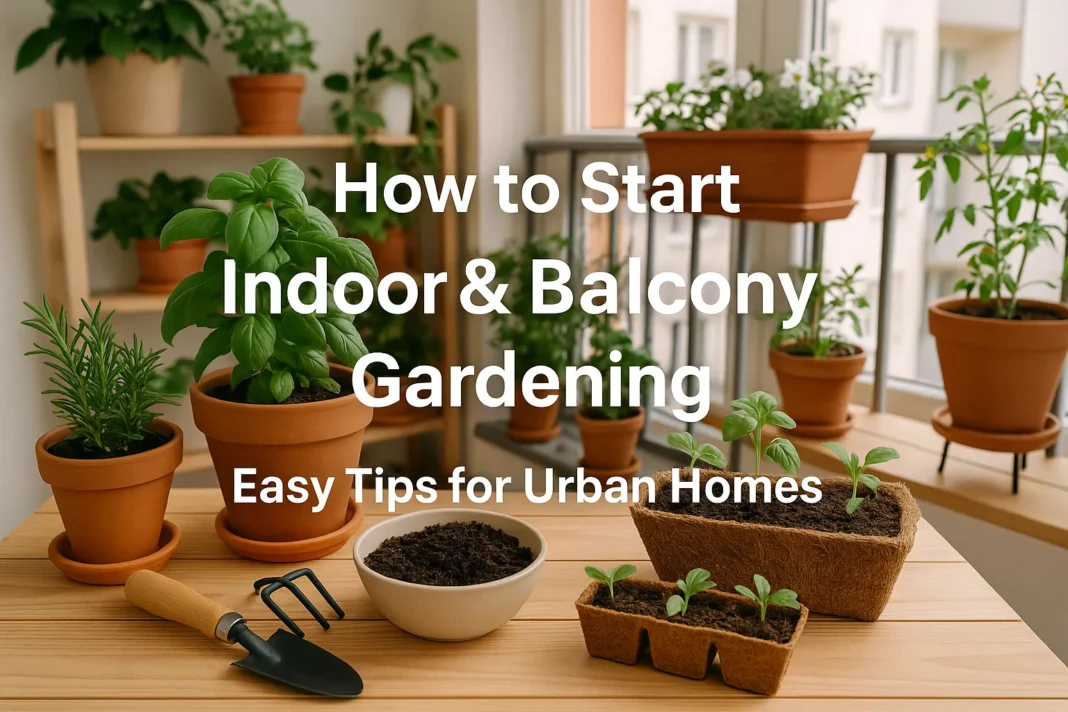
Indoor and balcony gardening has become a popular way for people living in apartments or compact houses to bring nature into their daily lives. Whether you want fresh herbs, green plants, or small flowers, indoor and balcony gardens can thrive in limited spaces with the right planning. You don’t need a big yard or complex tools to start; even small corners or window shelves can support healthy, beautiful plants.
However, indoor and balcony gardening is much simpler than most people realize. It helps reduce stress, purifies the air, and brings color into compact homes. Growing your own herbs or leafy greens can also support healthy cooking without frequent grocery trips. With smart choices in plants, soil, light, and watering, anyone can create a green corner at home. These tips will help new gardeners understand what to grow, how to maintain plants, and how to build a small garden that survives busy routines and limited space.
Choose the Right Plants for Small Spaces
Not all plants grow well indoors or on balconies, so picking the right ones is important. Some easy options include:
- Money plant and pothos
- Snake plant
- Spider plant
- Aloe vera
- Basil, mint, and coriander for herbs
- Peace lily and ferns for shaded areas
Select plants based on sunlight. For low-light corners, use snake plant or ZZ plant. For sunny balconies, choose flowering plants or herbs.
Use Proper Pots and Soil
Good soil makes gardening easier. Indoor plants often prefer a light soil mix with compost and cocopeat that drains well. If soil becomes too heavy, roots may rot. Use:
- Clay or terracotta pots for breathability
- Plastic or recycled containers for lightweight balconies
- Self-watering pots for busy routines
Make sure every pot has drainage holes to prevent water from accumulating.
Manage Sunlight and Shade
Understanding light conditions will save your plants. For indoor gardening:
- Place light-loving plants near windows
- Rotate pots every week for balanced growth
- Use grow lights if your space lacks sunlight
For balconies:
- Check how many hours of sun they receive daily
- Grow sun-loving herbs and flowering plants on sunny sides
- Keep shade-loving ferns and indoor plants in low-light corners
Water Smartly, Not Frequently
Overwatering is a common mistake. Plants often die not from neglect, but from excess care. Water only when:
- The top layer of soil feels dry
- Leaves start drooping slightly (for some plants)
- You see the soil pull away from the pot edges
Morning watering works best. Avoid watering at night because soil stays wet longer.
Use Vertical and Hanging Planters
Small homes benefit from vertical gardening, especially on balconies. You can:
- Hang pots on railings
- Use wall-mounted planters
- Install tiered plant stands
- Try hanging baskets with trailing plants
This saves floor space and allows more plants to grow in limited areas.
Feed Plants Occasionally
You don’t need chemical fertilizers. Simple organic options like compost, cow dung, or liquid bio-fertilizers work well. Feeding plants every 30 to 45 days is usually enough for healthy growth.
Final Note
Indoor and balcony gardening is an easy and satisfying way to add greenery to urban homes. With smart plant selection, proper soil, and simple watering habits, even a small space can become a flourishing garden. If you found this article informative, feel free to check out our other articles as well.