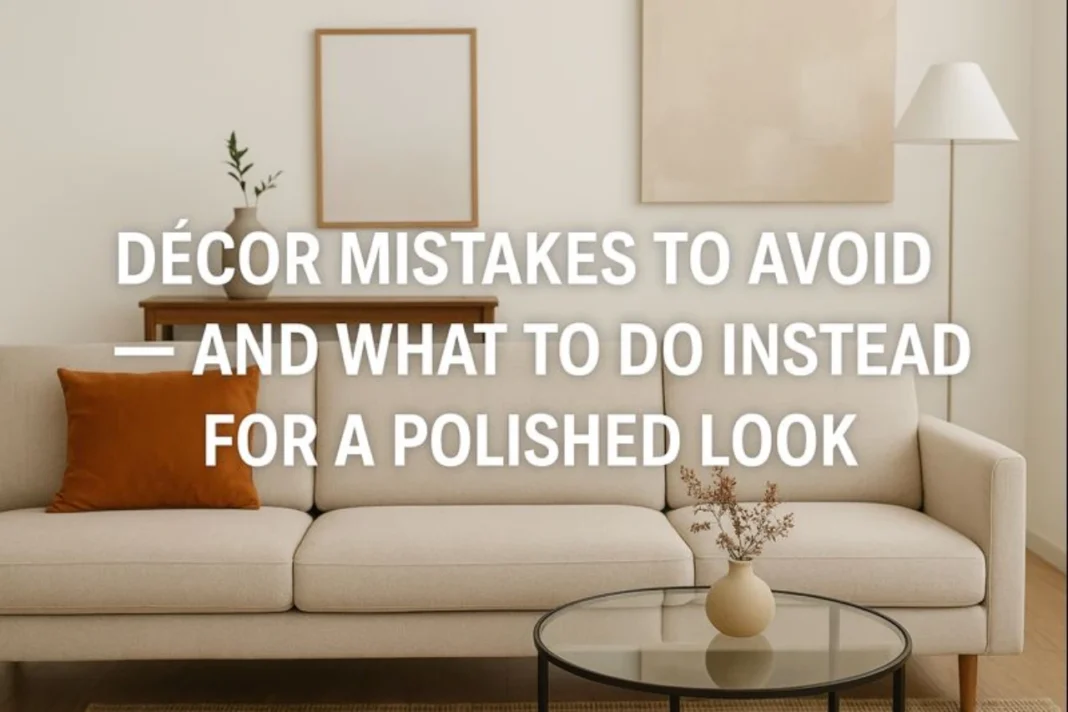
A well-decorated home doesn’t always need expensive furniture or the latest design trends. What truly makes a space feel polished is balance, thoughtful placement, and practical styling. Many people add too many items, follow mismatched ideas, or choose decor based on impulse rather than purpose. As a result, their homes feel cluttered, dull, or disconnected even after spending money on decor.
This topic matters because most people don’t realize that small decisions—like light placement, wall colors, or the height of hanging frames—can change the entire personality of a room. You can spend a lot on decor and still end up with a room that doesn’t feel right. On the other hand, a few smart corrections can make your space look effortlessly elegant without replacing everything. Every house deserves more than random styling; it deserves choices that reflect comfort, taste, and intention. So let’s look at common decor mistakes people make and simple solutions that turn any room into a refined, well-balanced space.
Mistake 1: Overcrowding the Room
Many people think more decor means better design. In reality, too many items can make a room feel busy and suffocating. Crowding reduces free movement and hides the beauty of the main elements.
What to Do Instead:
Keep a few standout pieces and remove anything that doesn’t serve a purpose. Focus on items that add personality, like a statement lamp, a bold rug, or a textured vase. Leave breathing space around furniture to let the room feel open.
Mistake 2: Using the Wrong Lighting
Harsh white lights or poorly lit spaces can ruin even the best interiors. Lighting affects mood, color tone, and the overall warmth of a home.
What to Do Instead:
Use layers of lighting—ambient lights, soft lamps, and task lighting. Warm light works best in living rooms and bedrooms, while focused lighting fits a study or kitchen counter. Try lampshades or dimmable LEDs for a softer glow.
Mistake 3: Matching Everything Too Perfectly
Matching furniture sets, uniform patterns, and identical colors may sound safe, but they can make a room look flat and predictable.
What to Do Instead:
Mix textures and tones for visual interest. Pair wood with metal, cotton with jute, or leather with linen. Choose complementary colors instead of exact matches. Contrast creates character without making the room look messy.
Mistake 4: Ignoring Wall Height and Frame Placement
Artwork hung too high or too low can make the room feel unbalanced. Frames that are too small or too large for the wall also disrupt visual harmony.
What to Do Instead:
Hang frames at eye level, ideally around the average shoulder-to-eye height. When in doubt, center them 57 to 60 inches from the floor. Create balanced arrangements rather than choosing random placements.
Mistake 5: Forgetting Practical Storage
Pretty decor often hides practical needs. Without storage, surfaces fill up with clutter, and even an expensive interior starts looking disorganized.
What to Do Instead:
Add closed storage—floating shelves, built-in cabinets, ottomans with hidden space, or a bench with drawers. Good storage keeps surfaces clean, making the room look polished and intentional.
Mistake 6: Choosing Trends Over Personal Style
Trendy pieces lose value quickly and often don’t reflect the homeowner’s personality. Decor becomes temporary rather than timeless.
What to Do Instead:
Choose decor that feels connected to your lifestyle—colors you actually enjoy, art that resonates with you, or a sofa that suits your comfort more than its trend value. Good style grows with you; trends fade away.
Final Note
A polished home doesn’t come from copying trends—it grows from thoughtful choices that balance beauty and practicality. Skip the clutter, choose lighting wisely, mix textures, and focus on pieces that matter to you. If you found this article informative, feel free to check out our other articles as well.