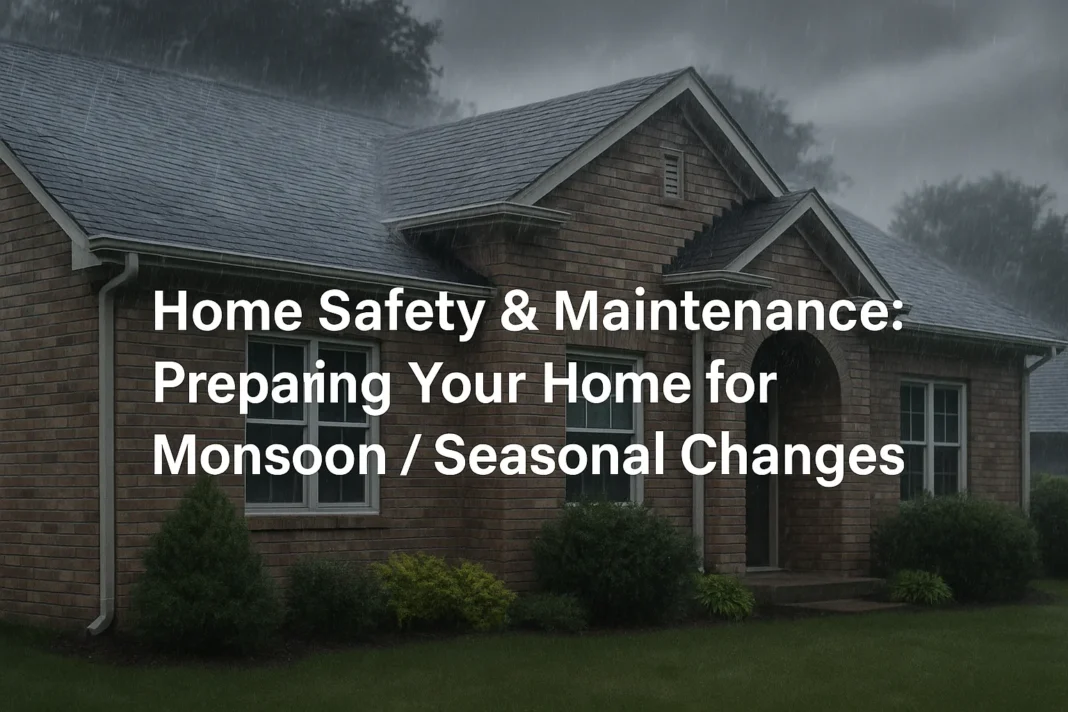
Seasonal changes, especially monsoons, often bring moisture, heavy winds, and sudden temperature shifts that can affect the condition of a home. During rainy months, homes are prone to leaks, damp walls, electrical hazards, and mold growth. Even small cracks or blocked drains can lead to major problems if not addressed early. Preparing the house before the season begins helps prevent damage and ensures a safe, comfortable living space.
Repairs after damage can be costly, and ignoring basic maintenance may risk safety. For example, unchecked wiring, clogged gutters, or loose roofs can lead to accidents or water seepage that damages furniture and electrical appliances. Seasonal home care doesn’t always require expensive repairs; simple inspections and timely fixes can protect a home from both structural and electrical hazards. This guide explains practical steps to prepare both indoor and outdoor areas for the monsoon or changing seasons, making homes safer and easier to maintain.
Check the Roof, Balcony, and Exterior Walls
Roofs and balconies are the first places to face heavy rain, so it is important to:
- Seal cracks with waterproof coating or sealants
- Ensure drains on terraces and balconies are not blocked
- Repair broken tiles or missing shingles on roofs
- Check exterior paint for peeling; a protective paint layer prevents seepage
Well-maintained roofing and balcony drainage reduce the risk of leaks inside the house.
Inspect Windows, Doors, and Ventilation Points
Preventing rainwater from entering through gaps and loose fittings is essential. Simple fixes include:
- Applying weatherproof strips around window and door edges
- Checking wooden frames for swelling or cracks
- Cleaning window tracks to avoid clogging
- Ensuring vents are covered with mesh to keep insects out
A dry, well-ventilated home reduces mold growth during humid weather.
Secure Electrical Fittings and Appliances
Humidity increases the risk of short circuits, so electrical safety is critical. Make sure to:
- Inspect loose wires and exposed sockets
- Keep extension cables away from damp floors
- Use surge protectors for appliances like refrigerators and TVs
- Avoid overloading circuits
If you notice sparks, burning smell, or flickering lights, call an electrician immediately.
Protect Furniture and Wooden Fixtures
Moisture can damage wood, upholstery, and metal furniture. To reduce risk:
- Keep wooden furniture away from walls prone to dampness
- Use camphor, neem leaves, or silica gel inside wardrobes to reduce humidity
- Polish wood to create a protective layer
- Lift rugs or carpets occasionally to avoid mold formation underneath
Ventilation plays a key role in preventing musty smells during the rainy season.
Clean Gutters, Drains, and Water Outlets
Blocked drains can cause water to pool, leading to leakage. Before the season:
- Clean gutters on roofs and balconies
- Remove leaves and debris from outdoor drains
- Check kitchen and bathroom drains for slow water flow
- Ensure water tanks are covered to avoid contamination
Free-flowing drainage prevents stagnant water and keeps pests away.
Watch for Signs of Dampness or Mold
Damp spots often appear early before visible leaks. Look out for:
- Musty smell in rooms
- Peeling paint or discoloration on walls
- White powder-like patches (salt deposits)
- Mold near windows, corners, or bathrooms
Fixing dampness early prevents health issues like allergies and breathing problems.
Final Note
Seasonal preparation is an investment in home safety. A few inspections and simple repairs before the monsoon or any seasonal change can save money and prevent accidents later. With proper drainage, electrical care, and moisture control, your home stays safe, dry, and comfortable throughout the year. If you found this article informative, feel free to check out our other articles as well.