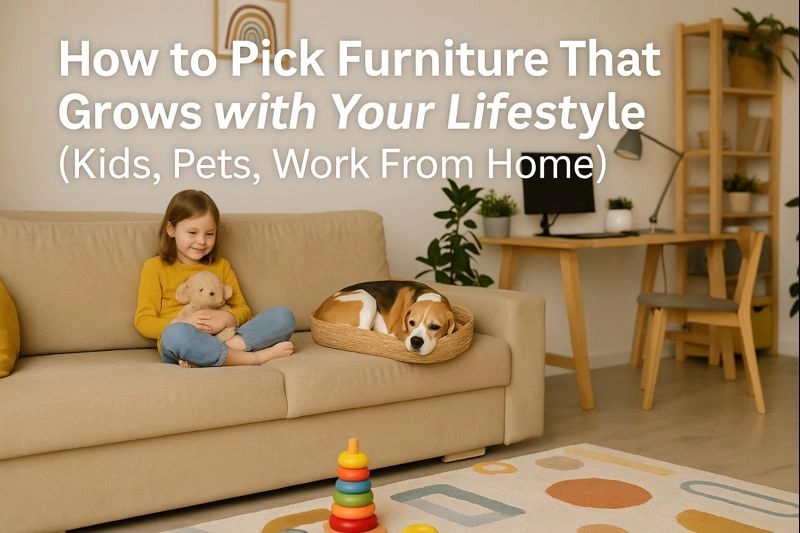
Choosing the right furniture is no longer just about looks. Homes today serve multiple purposes at the same time — a living room can be a play area, a home office, a pet zone, and a family hangout spot. Furniture that adapts to these changing needs saves effort, reduces future expenses, and makes everyday life easier. Instead of replacing items every few years, you can invest in pieces that grow with your lifestyle.
A family might buy a fancy white sofa, only to regret it when a baby spills food or a dog scratches it. Someone working from home might choose a pretty desk with no storage, and later struggle with clutter. When furniture choices are made with foresight, homes stay smarter, more comfortable, and more cost-effective. Instead of impulsive buying, thoughtful planning helps create a home that adapts to children as they grow, pets as they explore, and evolving work routines. Below are key ideas to keep in mind while selecting lifelong furniture.
Choose Durable and Easy-to-Clean Materials
Families with kids or pets require furniture that can handle a little chaos. Practical material choices include:
- Stain-resistant fabrics like microfiber or performance velvet
- Leatherette or treated leather that wipes clean easily
- Wooden surfaces with protective coatings
- Scratch-resistant laminate for work desks
Avoid delicate fabrics like silk and easily stained cotton blends. Furniture that cleans easily saves time and frustration.
Look for Multi-Functional Pieces
Smart furniture reduces clutter and adapts to different uses. Multi-purpose pieces work well for families and professionals, such as:
- Sofa beds that double as guest beds
- Ottomans with hidden storage
- Coffee tables with lift-up work surfaces
- Foldable study desks for shared spaces
These pieces support flexible living, especially in compact homes.
Prioritize Safe and Rounded Designs
For homes with children or playful pets, sharp corners can be risky. Choose:
- Rounded edges on tables and chairs
- Low-height sofas or beds for easy access
- Non-toxic finishes on wood
- Sturdy frames that don’t topple easily
Safety-based furniture ensures peace of mind without compromising style.
Opt for Modular Furniture for Growing Needs
Modular designs offer flexibility as families change. A modular sofa can expand if you move to a bigger home, while a modular wardrobe can adapt to more clothes over time. Examples include:
- Sectional sofas that rearrange easily
- Expandable dining tables
- Stackable shelves and storage cubes
- Adjustable height study tables for kids
Modular furniture evolves with both space and lifestyle changes.
Pick Colors and Patterns That Age Well
Instead of trendy prints that may look outdated, choose:
- Neutral tones like beige, charcoal, brown, or olive
- Subtle patterns that hide stains without looking loud
- Solid colors that match future decor
Accent pillows, throws, or cushions can be changed seasonally to refresh the look without buying new furniture.
Consider Pet-Friendly Features If You Have Animals
Pets can be hard on furniture, so choose wisely:
- Avoid looped fabrics that catch claws
- Choose tight-weave upholstery that resists scratching
- Use removable, washable covers for sofas
- Look for raised furniture so you can clean underneath easily
Furniture that welcomes pets is more durable and easier to maintain.
Final Note
Furniture should support your lifestyle, not restrict it. Whether you’re raising kids, sharing your home with pets, or working remotely, thoughtful choices can keep your home practical, stylish, and future-ready. If you found this article informative, feel free to check out our other articles as well.