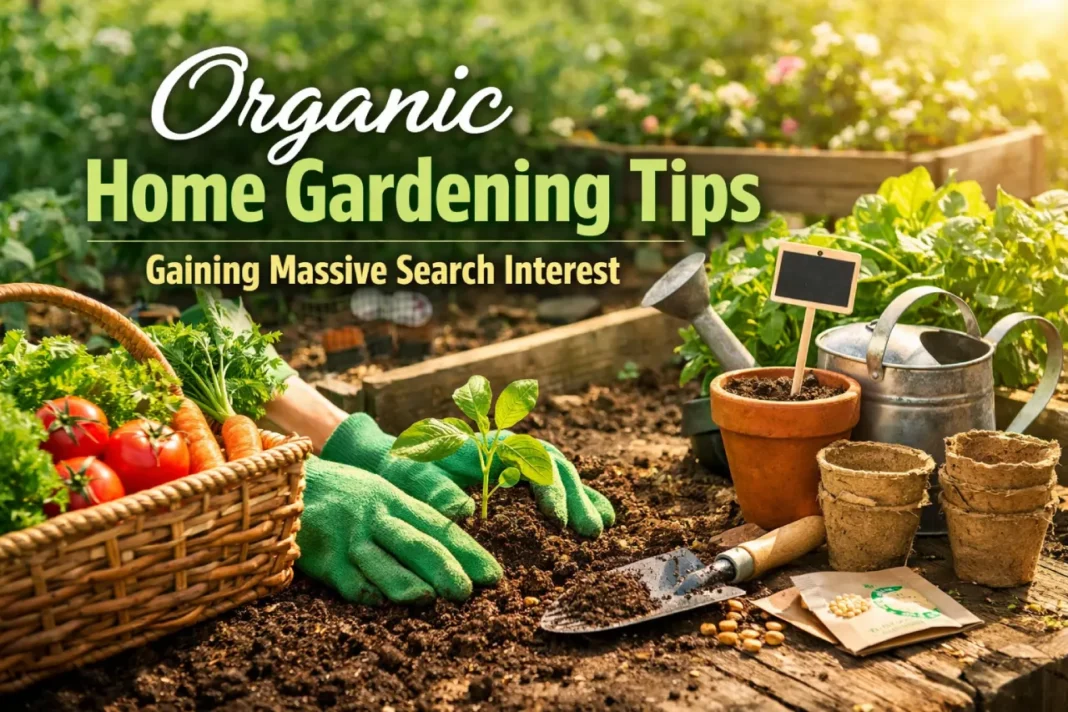
Organic home gardening is seeing a sharp rise in search interest as more people want clean, chemical-free food grown right at home. From balconies and terraces to backyard patches, homeowners are turning small spaces into productive gardens. The appeal lies in knowing exactly what goes into the soil and what ends up on the plate. Organic gardening is no longer seen as slow or complicated; it is now viewed as practical, affordable, and suitable for everyday life.
Many beginners assume organic gardening needs deep expertise or expensive inputs, which isn’t true anymore. The surge in searches shows people are looking for simple, realistic ways to grow vegetables, herbs, and fruits without synthetic fertilizers or pesticides. There’s also a growing awareness about soil health, food quality, and long-term sustainability. Organic gardening fits naturally into this mindset. With the right habits and a bit of patience, even first-time gardeners can succeed. Below are organic gardening tips that are drawing attention because they actually work in home settings.
Start with Healthy Soil, Not Fertilizers
Organic gardening always begins with soil quality. Instead of relying on chemical boosters, focus on:
- Mixing compost into garden soil
- Using coco peat or leaf mold for better texture
- Avoiding compacted or waterlogged soil
Healthy soil supports strong roots and reduces plant problems later.
Composting at Home Is a Major Trend
Home composting searches have grown rapidly. Kitchen waste can easily be turned into nutrient-rich compost. Common compost materials include:
- Vegetable peels and fruit scraps
- Dry leaves and garden waste
- Used tea leaves or coffee grounds
Composting reduces waste and improves soil naturally over time.
Choose Native and Seasonal Plants
Organic gardening works best when plants suit local conditions. People are searching more for:
- Seasonal vegetables instead of year-round crops
- Native plant varieties
- Herbs that thrive naturally in the climate
These plants need less intervention and resist pests better.
Use Natural Pest Control Methods
Chemical pesticides are being replaced with simple organic solutions. Popular natural methods include:
- Neem oil spray for insects
- Soap water for aphids
- Companion planting to repel pests
These methods protect plants without harming soil health or beneficial insects.
Water Smartly, Not Frequently
Overwatering is one of the biggest mistakes in home gardening. Organic gardeners focus on:
- Watering early in the morning
- Checking soil moisture before watering
- Using mulch to retain moisture
Proper watering encourages deeper root growth and healthier plants.
Mulching Is Gaining Attention
Mulching is trending because it improves plant health with minimal effort. Organic mulch options include:
- Dry leaves
- Straw
- Coconut husk chips
Mulch helps control weeds, maintain moisture, and improve soil quality naturally.
Grow What You Actually Eat
Many gardeners now search for practical plant choices rather than decorative ones. Popular organic home garden plants include:
- Tomatoes and chilies
- Spinach and leafy greens
- Mint, coriander, and basil
Growing familiar food items keeps motivation high and waste low.
Containers and Raised Beds Are Preferred
For urban homes, organic gardening often means container setups. Searches show interest in:
- Raised garden beds
- Fabric grow bags
- Clay or ceramic pots
These options improve drainage and make soil management easier.
Patience Is Part of Organic Gardening
Organic gardening is slower, but it builds long-term results. Plants grow steadily, soil improves each season, and maintenance becomes easier over time. Many gardeners now accept slower growth in exchange for healthier produce and soil.
Final Note
Organic home gardening is gaining search interest because it aligns with healthier, more conscious living. With simple habits, natural inputs, and realistic expectations, anyone can grow food organically at home. It’s not about perfection, but consistency. If you found this article informative, feel free to check out our other articles as well.