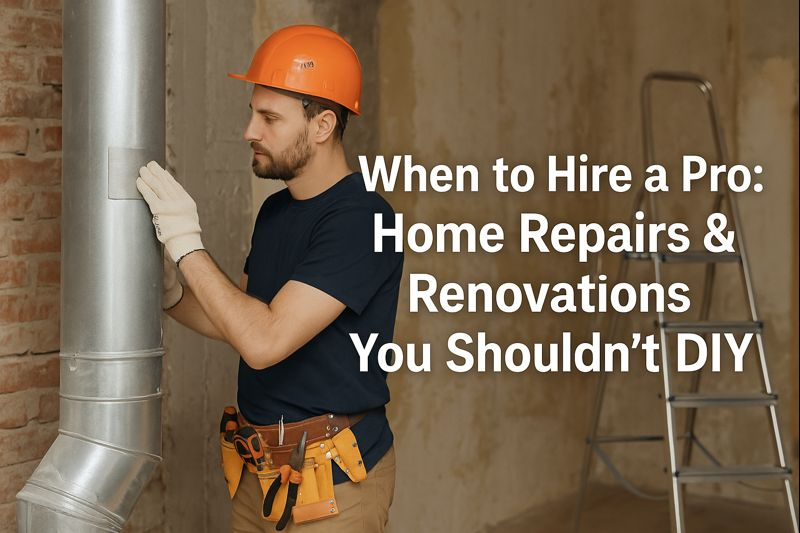
DIY home repairs can seem exciting at first — you save money, learn new skills, and feel proud of doing things on your own. Painting a wall, fixing a loose cabinet door, or assembling furniture are perfect examples of projects anyone can learn with basic tools. But not every home repair is meant to be tackled without expertise. Some tasks involve risks that can lead to injury, expensive damage, or structural problems if not handled correctly.
What makes this topic worth discussing is how often people underestimate complicated repairs just because online tutorials make them look simple. A five-minute video doesn’t show the years of training professionals have or the consequences of a wrong move. A single mistake in electrical wiring can cause a fire hazard, and a wrongly broken wall can affect the building’s stability. Cheap DIY fixes sometimes cost more later when a professional has to redo the work. The smartest homeowners know when to work on their own and when to bring in a specialist. Understanding that difference protects your home and avoids unnecessary risks.
Electrical Work and Wiring
Electrical systems require skill and understanding of codes and safety standards. DIY mistakes can cause shocks, short circuits, or even fires. Jobs that should always be handled by licensed electricians include:
- Rewiring or adding new circuits
- Installing heavy appliances requiring a dedicated line
- Fixing exposed or damaged wiring
- Upgrading fuse boxes or circuit breakers
Replacing bulbs or installing a simple plug switch is fine, but anything beyond basic fixes can be dangerous if you’re not trained.
Plumbing Repairs and Pipe Installation
Plumbing looks simple until a hidden leak damages your walls or floors. Incorrect repairs can lead to mold growth, water waste, and structural issues. Call a plumber for:
- Burst pipes or underground leak detection
- Bathroom or kitchen pipeline replacements
- Water heater issues and pressure valve repairs
- Clogged drainage that chemicals or plungers can’t fix
DIY plumbing often turns into bigger, messier problems that cost more to fix later.
Structural Changes and Wall Demolition
Removing a wall may seem like a way to open up space, but not all walls are safe to break. Load-bearing walls support the building’s weight. Damaging one can cause cracks, sagging ceilings, or worse. Always hire pros for:
- Structural redesigns
- Expanding rooms or shifting doorways
- Adding floors or changing roof layout
Even small structural changes need professional planning.
Roofing Repairs and Waterproofing
Roof leaks, broken tiles, and waterproofing are not DIY jobs. Working on roofs is risky, and poor sealing leads to long-term damage. Professionals know:
- How to work safely at heights
- Which sealants and materials are weather-resistant
- How to diagnose hidden leak sources
Attempting this alone can be dangerous and ineffective.
Major Tile and Flooring Installation
Flooring requires precision. Wrong alignment, cracked tiles, and uneven levels are expensive to correct later. Hire experts for:
- Full room tiling
- Marble or hardwood installation
- Polishing and leveling work
DIY can work for small patch repairs, but laying entire floors needs accuracy and tools.
Gas Line and Appliance Installation
Gas leaks are extremely dangerous. Only licensed technicians should handle:
- Gas stove installation
- Pipeline repairs
- Indoor gas line extensions
Never compromise safety in this area.
Final Note
DIY projects are fun and useful for small tasks, but bigger repairs require professional skill. Knowing when to step back protects your home’s safety and saves money in the long run. If you found this article informative, feel free to check out our other articles as well.